Every business owner knows that equipment costs money. What few recognize is just how much the wrong equipment strategy costs — not in the obvious line items on a purchase order, but in the quieter, harder-to-see ways that erode margins over time. The gap between a good equipment strategy and a poor one is rarely dramatic — it does not show up as a single catastrophic expense. It shows up gradually, in the steady, compounding drain of decisions that were never revisited after they were made. This article is a practical guide for business owners who want to look honestly at how their equipment decisions are affecting their profitability — and build a smarter approach going forward.
The Hidden Cost of Getting Equipment Strategy Wrong
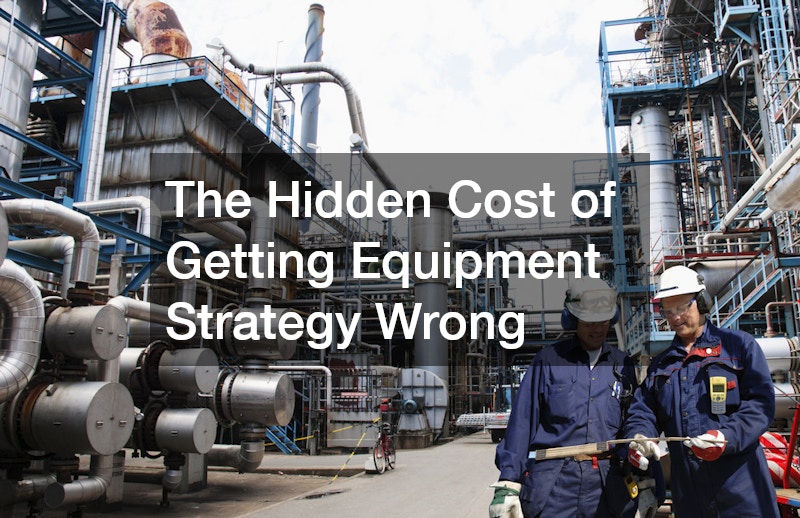
Most equipment decisions are made in the moment — when a need arises, when a deal appears, or when a piece of equipment finally fails beyond repair. What they rarely are is strategic. And the cost of that reactive approach accumulates in ways that are easy to overlook precisely because they are spread across so many line items.
The wrong acquisition model does not just affect your capital budget. It affects your cash flow, your operational flexibility, your maintenance burden, and your ability to respond when market conditions change. A business that owns more equipment than it needs is carrying dead weight — assets that consume resources without generating proportional returns. A business that underinvests in the right equipment pays for it in inefficiency, downtime, and missed capacity.
The difference between equipment that serves your business and equipment that burdens it comes down to one question: Is this asset generating more value than it costs to own, operate, and maintain? If the answer is unclear, that is itself a signal that your equipment strategy needs attention.
Understanding the True Cost of Ownership
Purchase price is the number most owners focus on when evaluating equipment. It is also one of the least complete ways to understand what a piece of equipment will actually cost over its useful life. The true cost of ownership includes maintenance, repairs, insurance, storage, operator training, and the depreciation that begins the moment an asset enters service — and it almost always exceeds what owners initially expect.
Utilization rate is the variable that matters most in determining whether ownership makes sense. An asset that runs at or near full capacity day after day is a strong candidate for ownership. An asset that sits idle for weeks at a time while still accumulating costs is not. The problem is that most businesses have never actually calculated the utilization rate of their equipment — they simply assume that because something gets used, it is earning its place in the operation.
Before making any future equipment decision, calculate the all-in cost of ownership for your existing assets and compare it against what it would cost to rent, lease, or outsource access to the same capability. For many businesses, that exercise produces genuinely surprising results — and identifies equipment that is quietly costing far more than it is worth.
The Case for Renting Heavy and Specialized Equipment
Heavy equipment represents one of the clearest cases for renting over owning. The purchase price is high, the utilization for most businesses is intermittent, and the cost of ownership — including storage, maintenance, insurance, and operator certification — adds up quickly. For businesses that need lifting, hauling, or site work capabilities on a project basis, building a relationship with a reliable crane rental company is almost always more cost-effective than owning the equipment outright.
The advantages of renting extend well beyond cost. When you rent, the maintenance responsibility stays with the provider. Equipment arrives ready to work, operated or supported by people who know it well, and returned when the project is complete. There is no residual value problem, no storage requirement, and no insurance burden between uses. For heavy and specialized assets that a business needs occasionally rather than continuously, renting is not a compromise — it is a smarter allocation of capital.
Evaluating rental over ownership should be a standard part of any equipment decision involving high purchase cost and low or unpredictable utilization. The break-even point between renting and owning is often further out than owners expect, and the flexibility that renting preserves has real value that rarely shows up in a simple cost comparison.
Testing, Compliance, and the Equipment You Only Need Sometimes
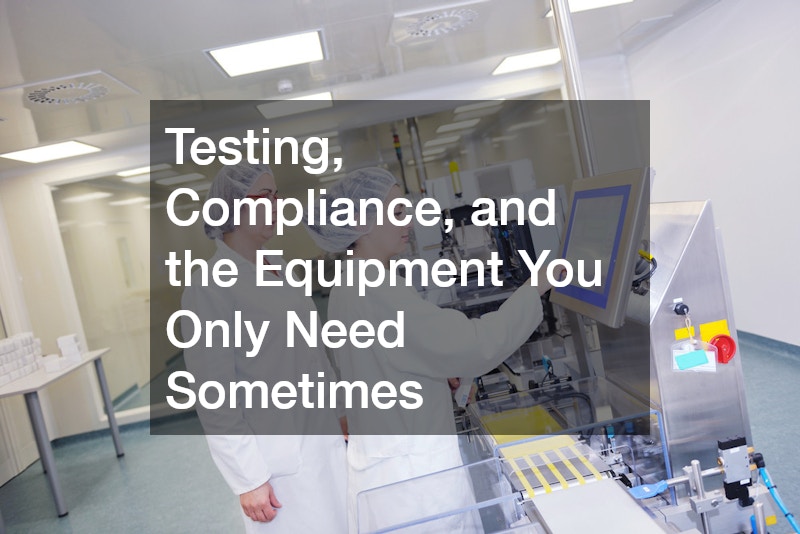
Precision testing and compliance equipment present a similar case. These assets are often expensive to purchase, technically complex to maintain, and subject to calibration and certification requirements that add ongoing cost and administrative burden. For businesses that need testing capabilities periodically — for product validation, regulatory compliance, or quality assurance — ownership is frequently the wrong model.
Environmental chamber testing is a clear example. Businesses that need to test products under controlled temperature, humidity, or pressure conditions may only require that capability for specific projects or seasonal validation cycles. Owning and maintaining a chamber to meet those periodic needs means carrying a significant asset that sits idle most of the time, while still requiring regular calibration, maintenance, and climate-controlled storage. Renting access to testing facilities or working with specialized providers is often a fraction of the cost and eliminates the maintenance burden.
The broader principle is that compliance and testing equipment should be evaluated not on whether it is needed, but on how frequently it is needed and whether that frequency justifies the full cost of ownership. In most cases, businesses that own specialized testing equipment use it far less than they assumed when they made the purchase decision.
Industrial Systems That Reward Long-Term Investment
Not every equipment category favors renting or outsourcing. Some facility-level systems deliver their strongest returns when they are owned, properly installed, and consistently maintained over the long term. These are typically systems that are deeply integrated into the operation, used continuously, and whose performance affects multiple areas of the business simultaneously.
Industrial water treatment systems are a strong example. For manufacturing facilities, food processing operations, and other businesses where water quality directly affects production output, product quality, and regulatory compliance, investing in a properly designed and maintained water treatment infrastructure pays dividends across the operation. The cost of inadequate water treatment — in equipment damage, product loss, compliance risk, and downtime — almost always exceeds the cost of the system itself over any meaningful time horizon.
The key distinction is integration and continuity of use. Systems that run constantly, affect the entire operation, and would be expensive or disruptive to rent or outsource regularly are the right candidates for ownership and long-term capital investment. The goal is not to own as much as possible or as little as possible — it is to match the acquisition model to the nature of each asset and how it serves the business.
Getting the Most Out of Your Production and Machining Assets
Production equipment sits at the heart of most manufacturing and fabrication businesses, and it deserves more rigorous financial scrutiny than it typically receives. The question is not just whether the equipment works, but whether it is generating sufficient output relative to its total cost — and whether ownership continues to make sense as production needs evolve.
CNC machining equipment represents a significant capital investment, and the decision to own versus outsource machining capacity is one that many businesses make once and never revisit, but production needs to change. A shop that justified its machining investment based on volume projections from three years ago may find that utilization has shifted, that newer technology has made the existing equipment less competitive, or that outsourcing specific machining operations to a specialist would reduce cost and improve quality simultaneously. Revisiting these decisions on a regular cycle rather than waiting for equipment failure is a hallmark of a financially disciplined operation.
The utilization analysis that applies to heavy equipment applies equally here. If your production assets are not running at rates that justify their all-in ownership cost, the question of whether to own, outsource, or upgrade deserves a serious answer — not a deferred one.
Storage, Logistics, and the Infrastructure of a Lean Operation
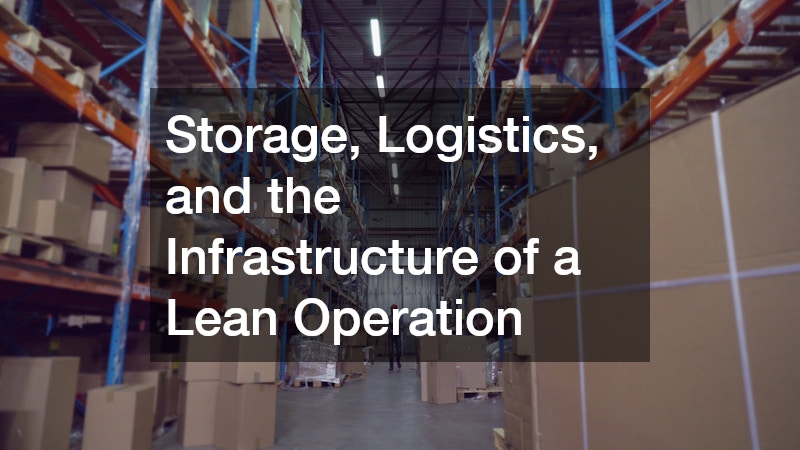
Physical infrastructure — storage space, loading facilities, logistics assets — is another area where businesses routinely carry more than they need or pay for inflexible solutions that do not match their actual operational requirements. The most profitable operations tend to be the ones that have matched their physical footprint to their real needs rather than their theoretical maximum.
Storage container modifications have created a flexible and cost-effective alternative to traditional fixed storage infrastructure for many businesses. Modified containers can be configured for a wide range of uses — climate-controlled storage, mobile workshops, secure equipment housing, temporary office space — and repositioned or reconfigured as operational needs change. For businesses dealing with seasonal volume fluctuation, facility transitions, or rapid growth, this kind of adaptable infrastructure offers real advantages over committing to permanent construction.
Logistics infrastructure deserves the same scrutiny. Businesses that rely on b2b delivery services for distribution have the opportunity to scale their logistics capacity up and down with demand rather than carrying fixed fleet costs through slow periods. Matching your logistics model to your actual shipping volume and frequency — rather than your peak capacity needs — is one of the more straightforward ways to reduce overhead without sacrificing service levels.
Measurement, Accuracy, and the Equipment That Protects Your Bottom Line
Measurement equipment is easy to underinvest in because its value is not always obvious until something goes wrong. But in production, fulfillment, and distribution environments, inaccurate measurement creates compounding problems — products that do not meet specifications, shipments that are billed incorrectly, inventory that does not reconcile, and compliance exposure that can result in fines or lost certifications.
Industrial scales are a clear example of measurement equipment whose cost of ownership is easily justified by the problems accurate measurement prevents. For businesses that price, ship, or manufacture by weight, a scale that drifts out of calibration or fails unexpectedly creates immediate financial exposure. The question is not whether to invest in reliable measurement capability — it is whether ownership, leasing, or a service contract that includes regular calibration and guaranteed replacement represents the best value for the specific application.
Keeping Equipment Running Without Letting Maintenance Drain Your Budget
Maintenance is the equipment cost that businesses most consistently underestimate and most frequently defer, and deferred maintenance is one of the most reliable predictors of unplanned downtime and emergency repair costs. The financial case for proactive maintenance is straightforward: a scheduled service almost always costs less than an emergency repair, and neither costs as much as unplanned downtime in a production environment.
Hydraulic repair services are a strong example of a maintenance category where proactive investment pays clear dividends. Hydraulic systems power a wide range of industrial equipment, and the failure of a hydraulic component can take an entire production line offline. Establishing a relationship with a qualified hydraulic repair provider — and scheduling regular system inspections rather than waiting for failure — reduces both the frequency and the severity of hydraulic-related downtime.
The same logic applies to tool repair and the broader category of tooling maintenance. Worn, damaged, or poorly maintained tooling reduces output quality, increases scrap rates, and puts additional stress on the machines it is used with. A disciplined tooling maintenance program is not an overhead cost — it is a production quality and equipment longevity investment that pays returns across the operation.
Building an Equipment Strategy That Protects and Grows Your Profits
The businesses that manage equipment most profitably are the ones that treat their equipment portfolio as a living strategy rather than a series of one-time decisions. They audit regularly, ask hard questions about utilization and total cost, and are willing to change course when the numbers indicate that a different approach would serve them better.
Compressed air services illustrate how even utility-level systems benefit from strategic thinking. Compressed air is one of the most widely used — and most inefficiently managed — utilities in industrial and manufacturing environments. Leaks, pressure drops, and undersized systems quietly waste energy and money every hour the operation runs. Treating compressed air infrastructure as a managed system rather than a set-it-and-forget-it installation can yield meaningful energy savings that go straight to the bottom line.